A closer look at how I work: the early drawings, the visual decisions and the finished frame.
01 / CBS NEWS · CLIMATE WATCH
Coral Lifesavers
A connection between coral and medicine, made visible.
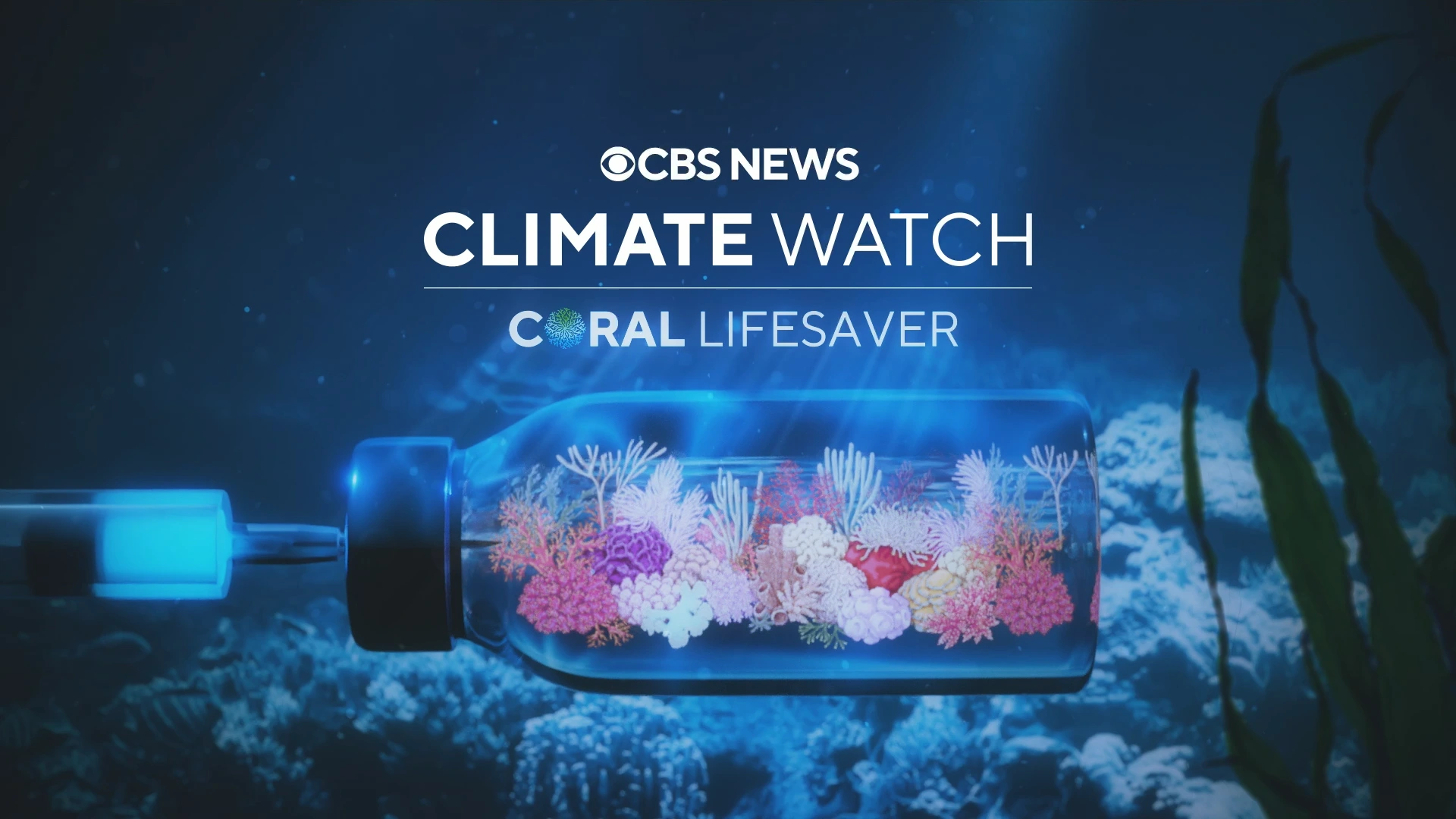
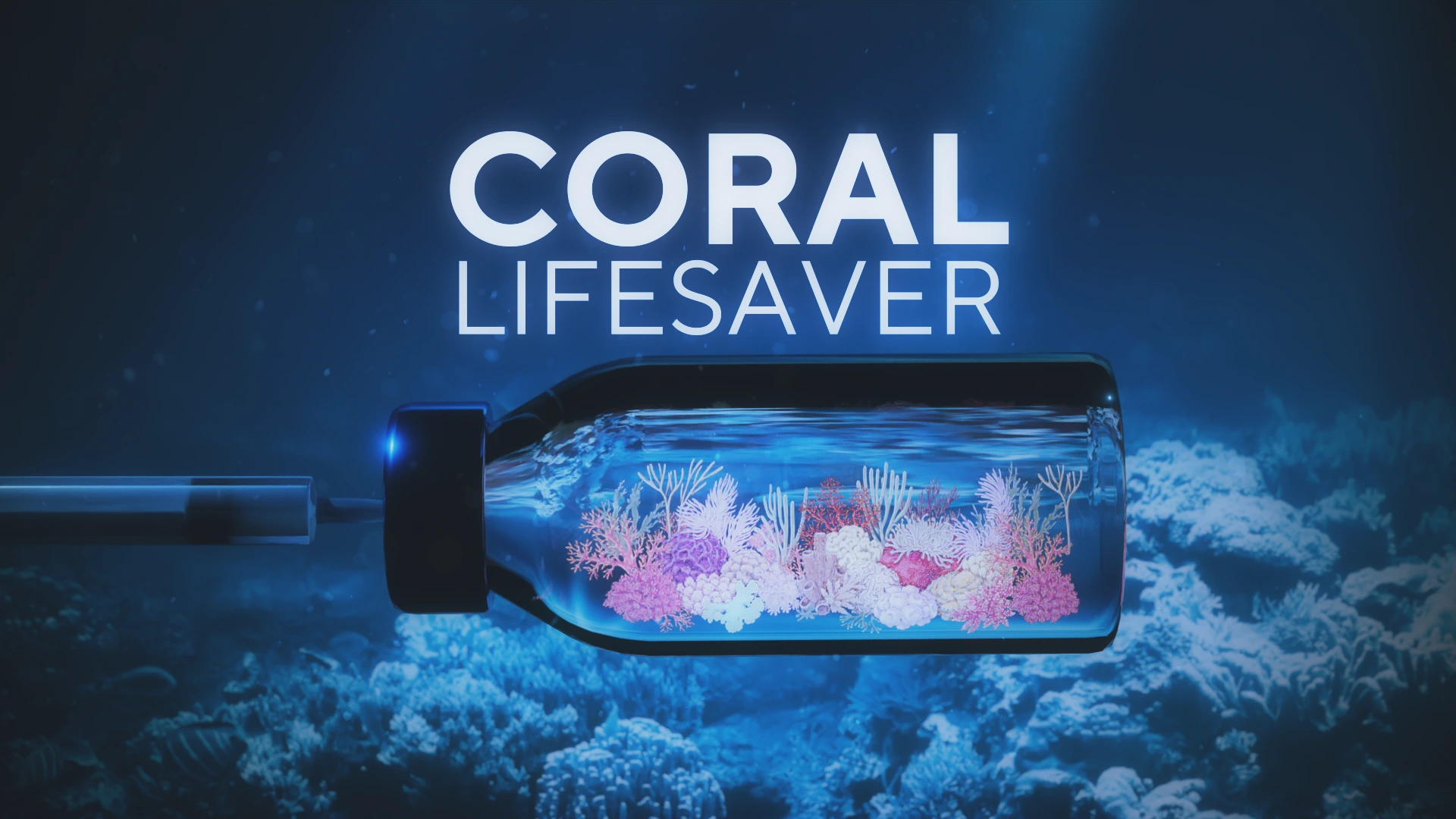
THE DRAWING / Finding the central image.THE FINAL / A coral reef contained in a medicine vial.
Find the connection.
For a news story about coral and lifesaving medicine, I developed the key-art concept on paper before taking it into Blender.
The visual idea brings the two subjects together in one object: coral contained inside medicine packaging.
01 / EXPLORE
Think on paper.
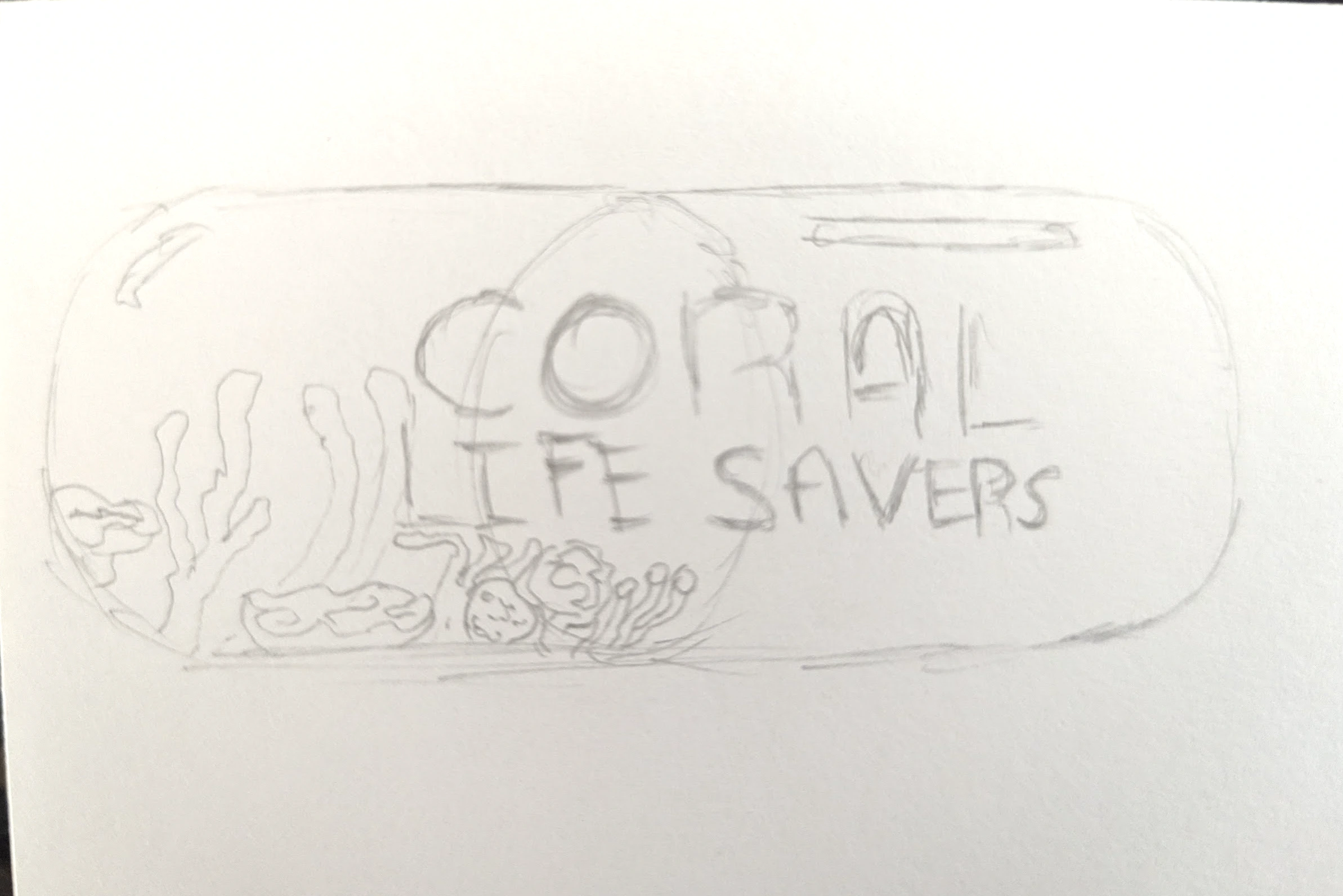
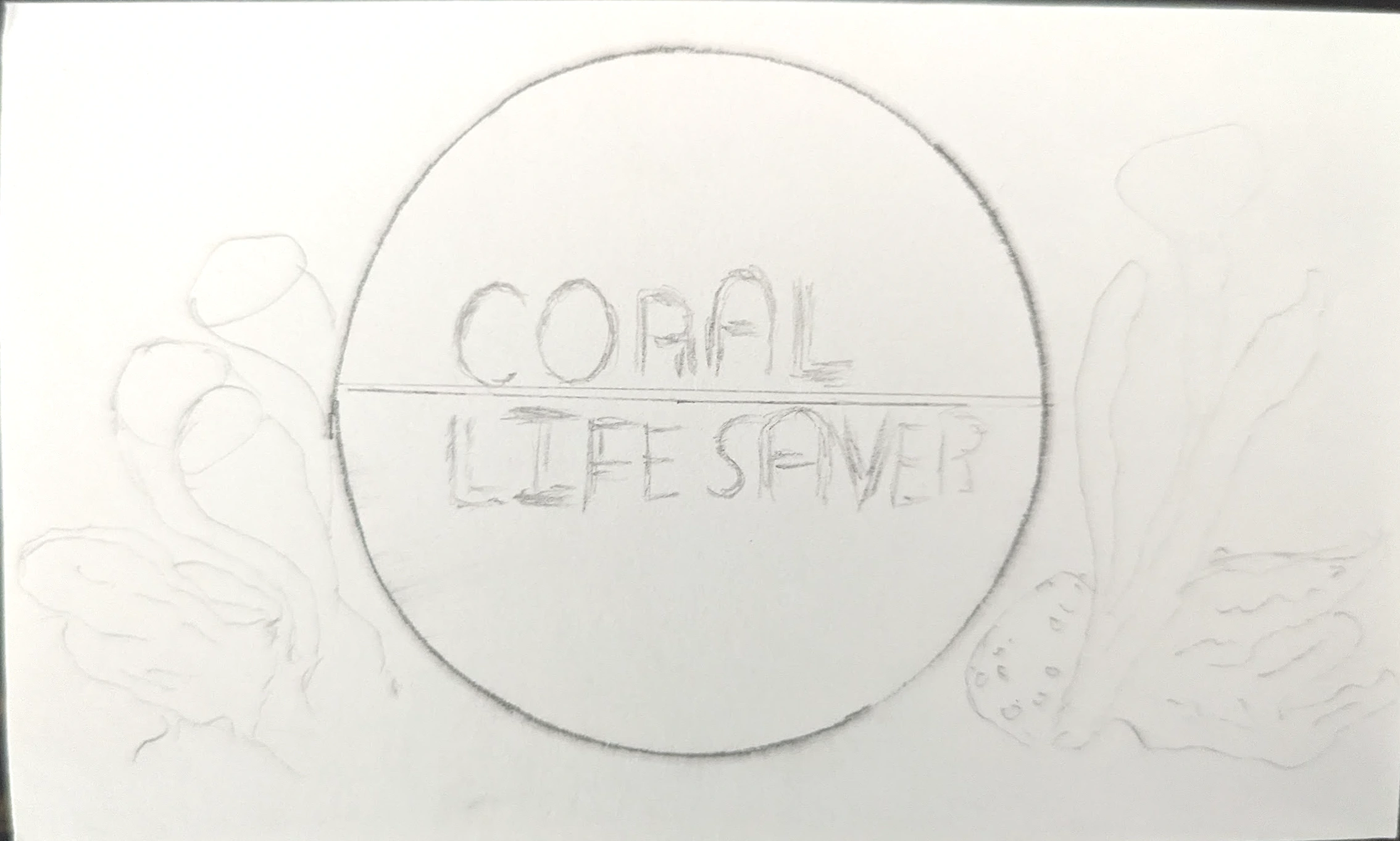
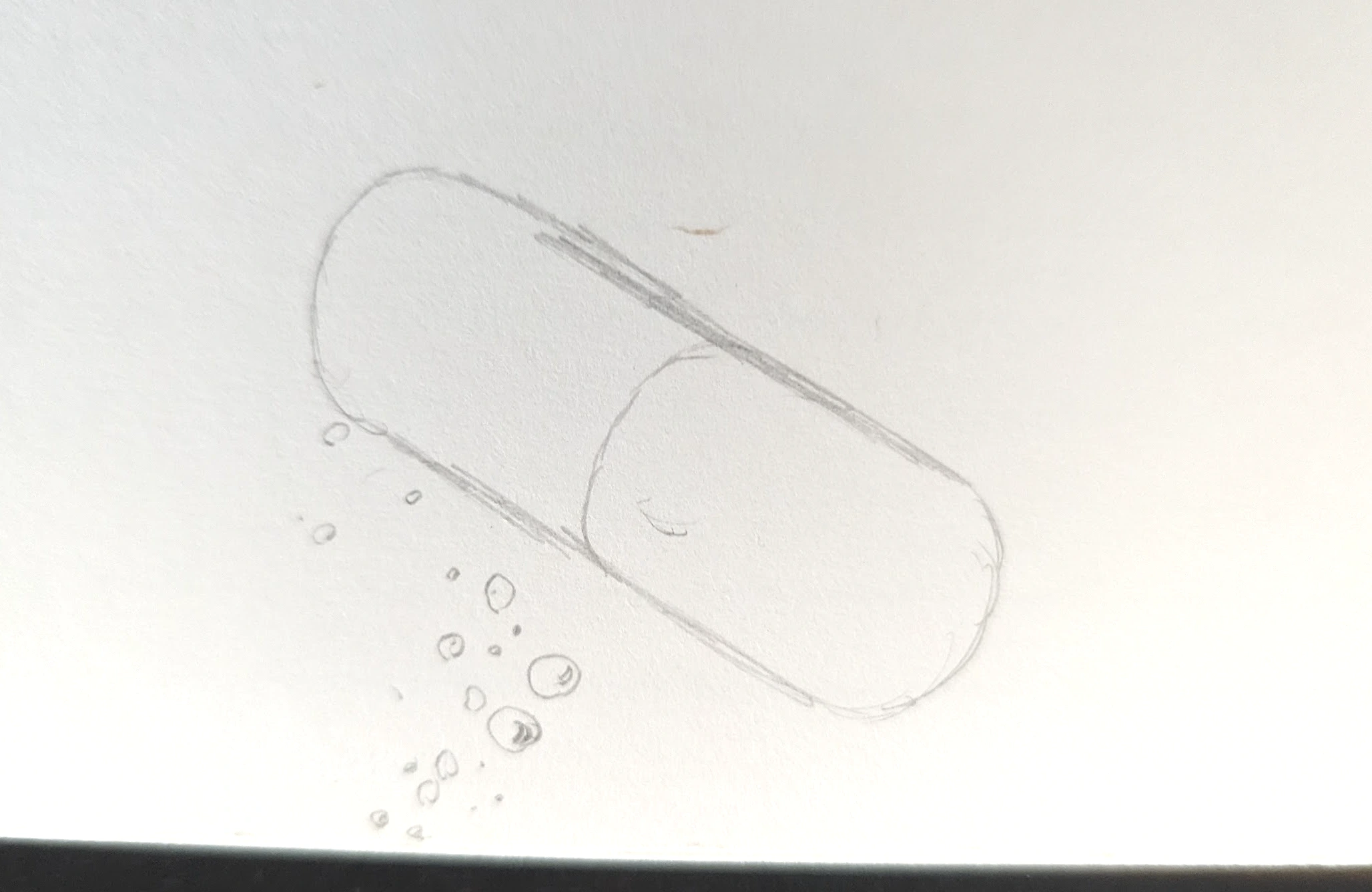
The drawings explore different ways to frame the story, from a circular title to a capsule containing a miniature reef.
A circular compositionThe title sits inside a round frame, with sea life around its edge.Coral inside a capsuleThe medicine shape becomes part of the image itself.An idea for movementAn opening capsule explores how the object could reveal its contents.
02 / DEVELOP
Build the idea in 3D.
I took the drawn concept into Blender. In the finished image, the capsule becomes a glass medicine vial, holding a reef within a larger underwater scene.
A new neutral preview rendered from the original Blender scene. The camera move reveals the illustrated coral within the 3D vial, before the finished color and titles.
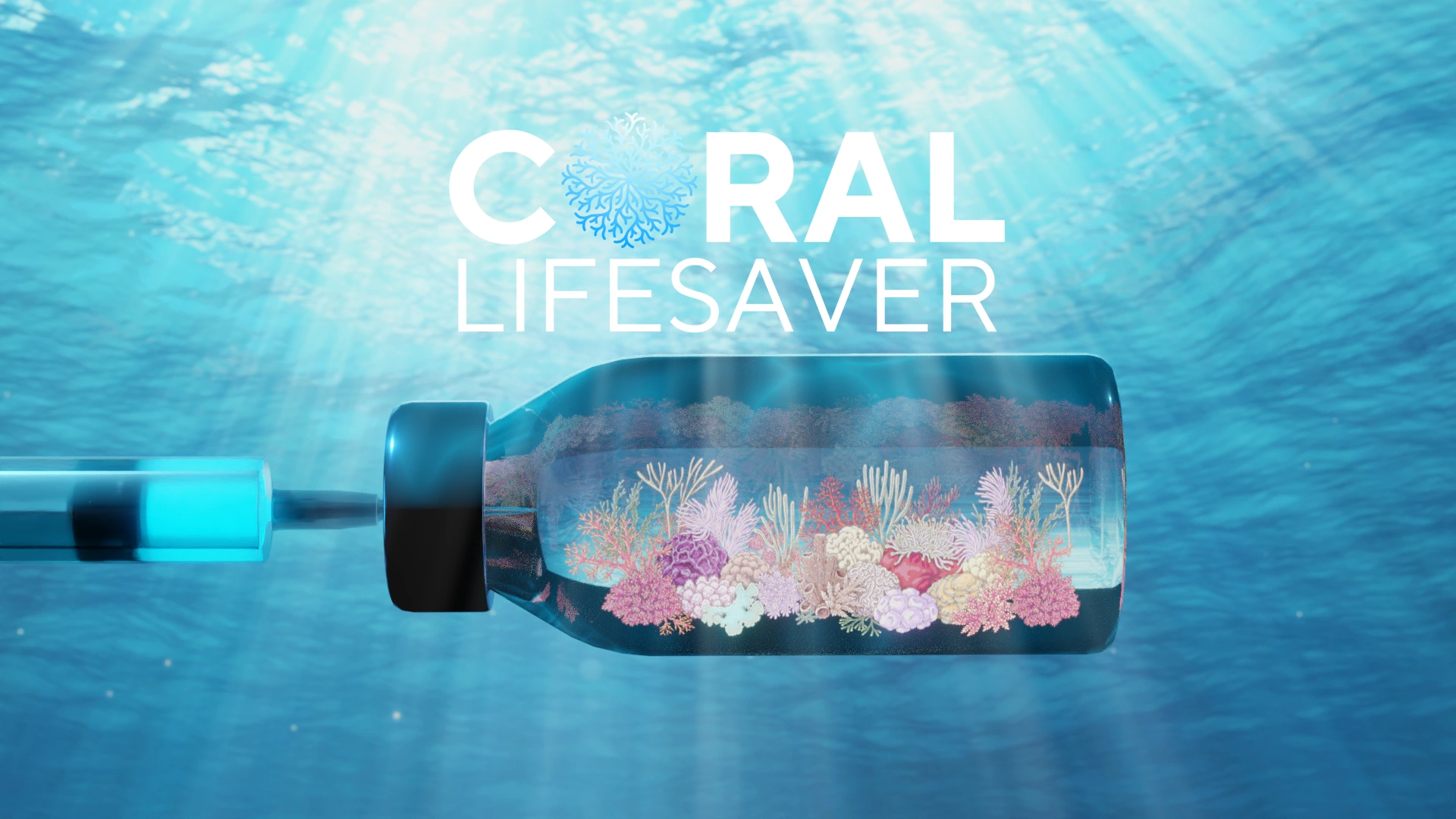
The rough conceptThe vial, coral and title are brought together in one underwater composition.A different treatment of lightA saved variation explores a brighter turquoise environment and a different balance between the object and its surroundings.
Original development exports from the project archive.
Refine the focus.
The finished key art uses a darker blue environment, with the colorful coral held inside the illuminated vial. The title sits above the object, leaving the central visual connection clear.
03 / FINAL
Let the image reveal the idea.
The opening moves from a close view of the coral into the wider composition, revealing the medicine vial and the story title.
Key-art concept, drawings and Blender development: Aaron Munoz. News story and reporting: CBS News. Original sketches shown from the project archive.
02 / CBS NEWS
Wildfires & Ozone
From a voiceover script to a visual explanation.
Make the sequence work.
I started with a voiceover script and developed the storyboards, animatic and final animation. The challenge was to give the explanation a visual sequence, moving from a forest to the atmosphere and into a car’s exhaust.
I mapped those transitions on paper, then used an animatic to work through the timing and flow before building the finished scenes.
01 / STORYBOARD
Lay out the story.
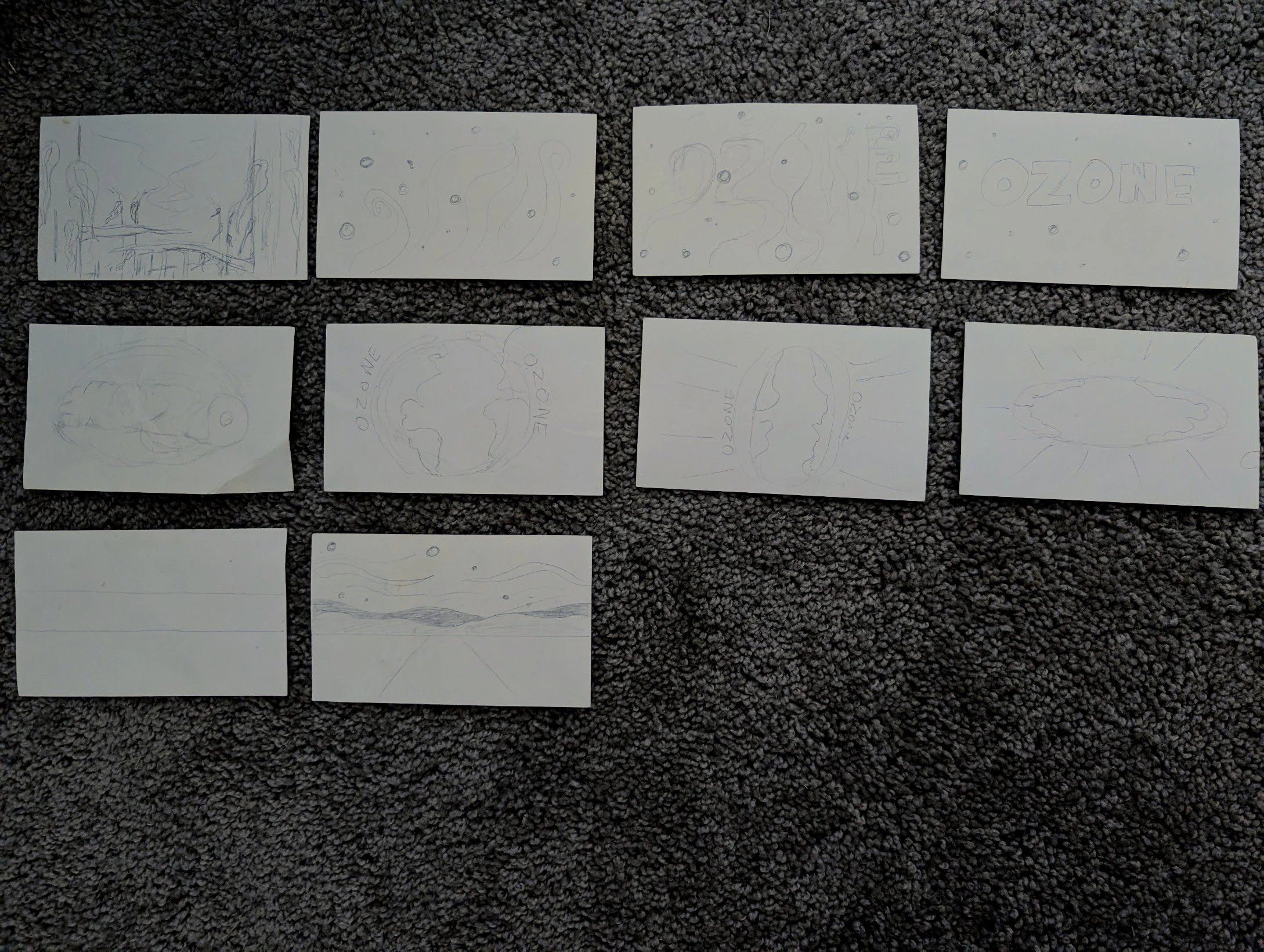
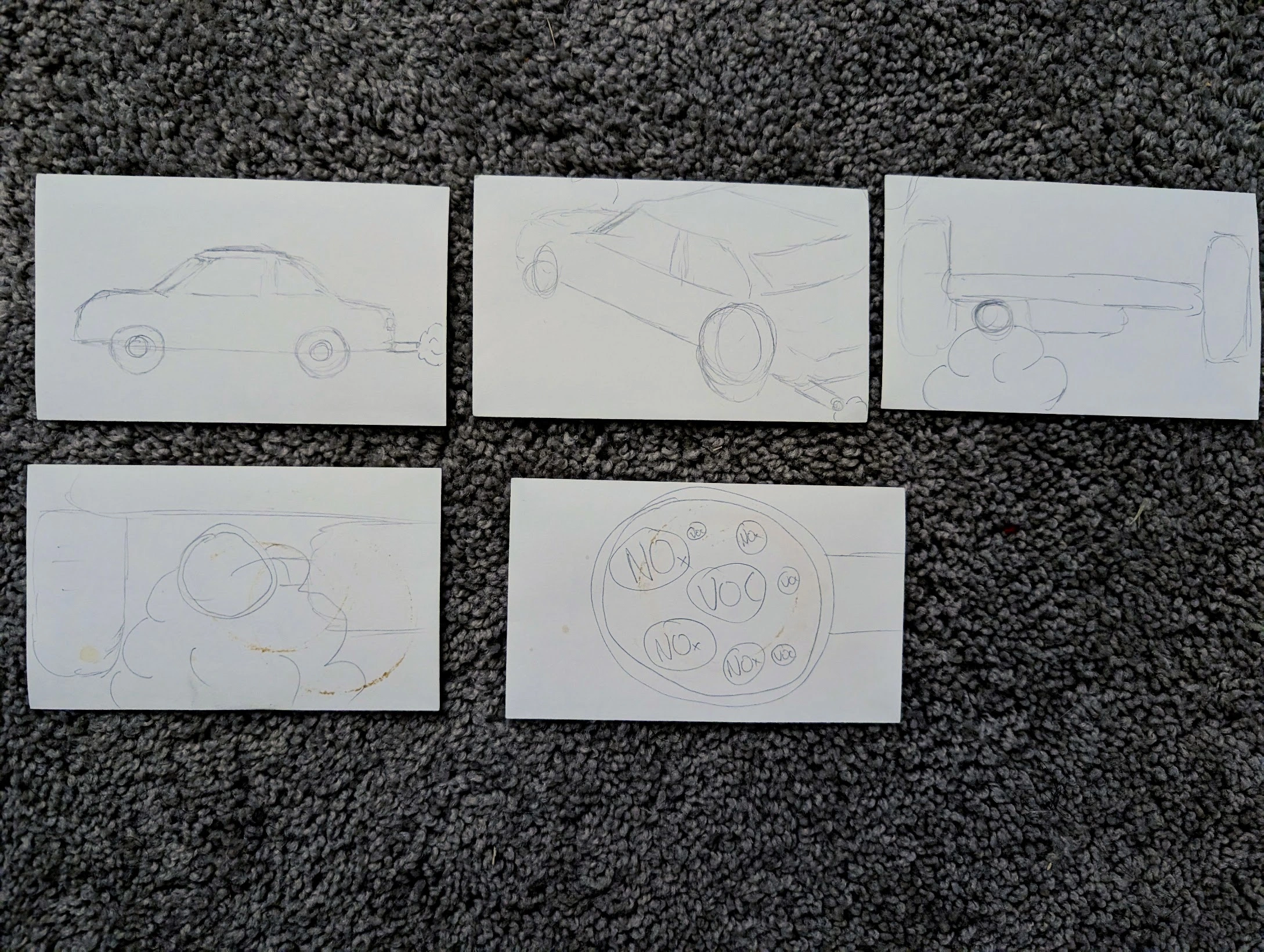
Two original storyboard sheets show the sequence at a glance. Open either image to see the drawings in detail.
From the forest to the atmosphereSmoke, lettering, a globe and a roadway establish the visual path through the explanation.From the car to its exhaustA wide view becomes a close-up, then a diagram of the particles inside the exhaust.
02 / ANIMATIC
Put the drawings in motion.
The animatic tests the flow between images, with warm forest colors shifting into a cooler atmosphere. It provides a moving plan for the finished sequence.
Three finished excerpts show how the drawn transitions translate into animation, from forest silhouettes and fluid lettering to the globe and the exhaust close-up.
Finding a visual language for an investigation into mail theft.
Connect the evidence.
I took the story brief from concept through finished animation, developing the visual approach, design and motion. Keys, mailboxes and documents give the investigation a shared visual language. The opening brings those elements together, while the supporting graphics carry the look into statistics and source material.
The project archive follows the development from an early Mail Theft treatment to the finished Keys to Crime title.
01 / CONCEPT
Start with the key.
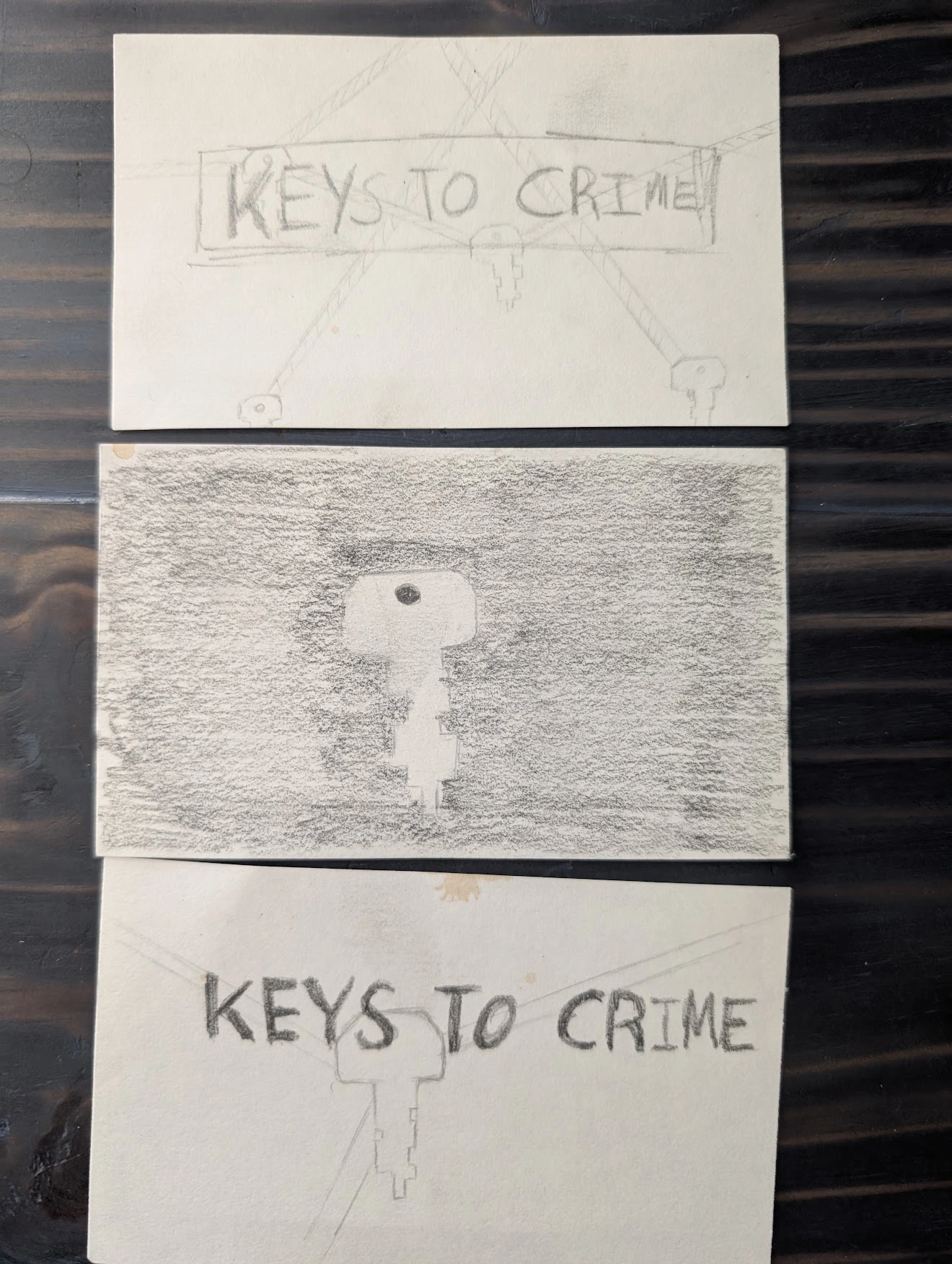
My pencil sketches explore the key as both a central image and a way to frame the title. The studies move between a key silhouette, crossing lines and the Keys to Crime lettering.
Original concept sketches. Open the image for a closer look.
02 / DEVELOPMENT
Establish the visual idea.
An early motion study pairs oversized keys with mailbox photographs, a drawn outline and a textured teal background. These elements establish the composition before the title and surface treatment change.
The final opening moves onto a corkboard, combining pinned photographs, envelopes and colored keys. The camera settles on the Keys to Crime title and CBS News Investigations signature.
Finished opening from the original project archive.
04 / IN THE STORY
Give the details a clear focus.
The supporting graphics combine large numbers, photographic context and highlighted documents. Each transition directs attention to the evidence being discussed.
Concept, art direction, design and animation: Aaron Munoz. Developed from a story brief for CBS News Investigations. Original sketches, development and finished project materials shown.